
Tongue Tie Treatment
Pre and post frenectomy myofunctional therapy for tongue tie (ankyloglossia). Restore full tongue mobility and function in Dallas, TX.
What Is a Tongue Tie?
A tongue tie (ankyloglossia) is a condition present at birth where the lingual frenulum — the thin band of tissue connecting the underside of the tongue to the floor of the mouth — is unusually short, thick, or tight. This restricted frenulum limits the tongue's range of motion, affecting its ability to move freely for feeding, speaking, and maintaining proper oral posture.
Tongue tie affects an estimated 4–11% of newborns and can range from mild to severe. While some individuals adapt without significant difficulty, others experience functional limitations that affect feeding, speech, breathing, and dental development throughout their lives.
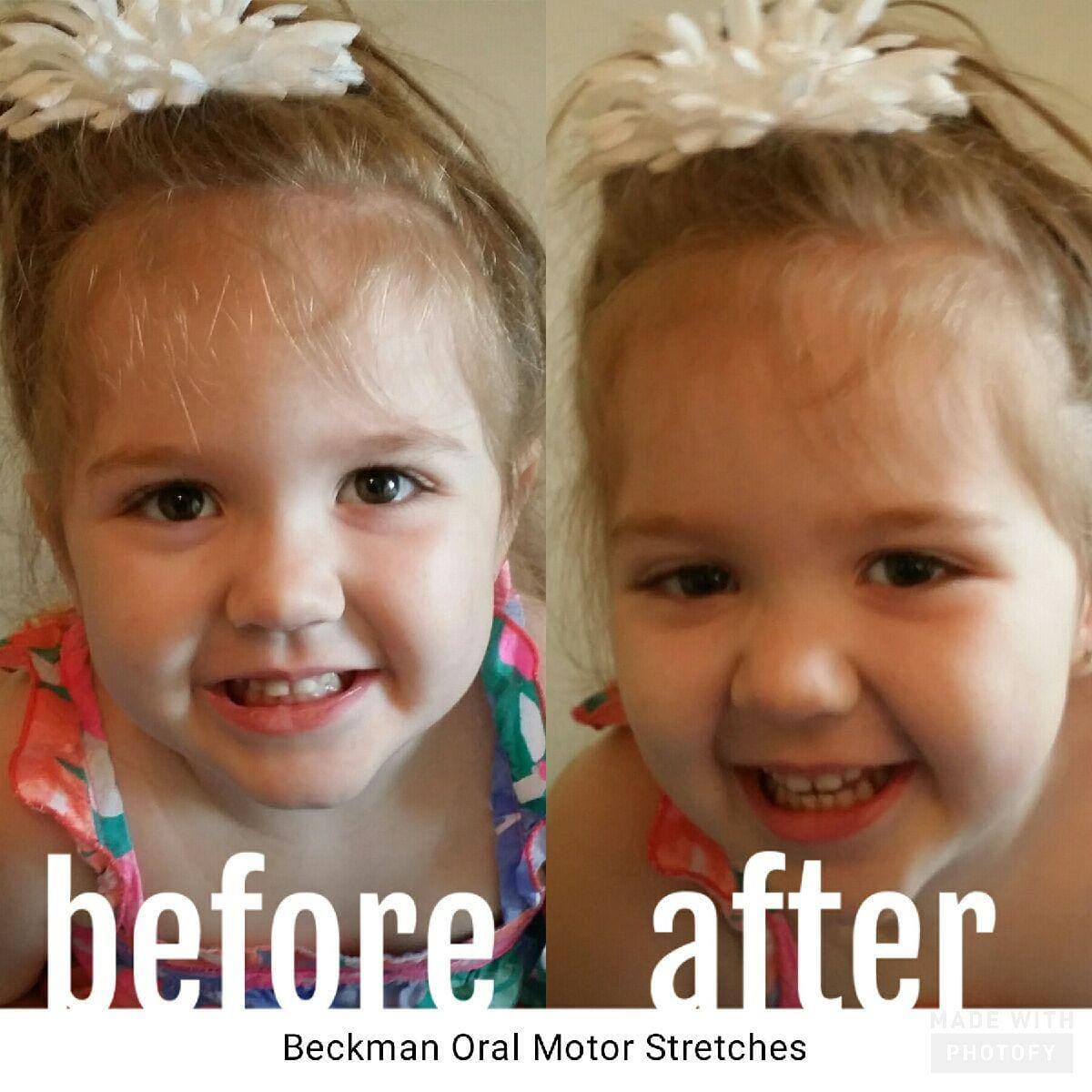
Before and after Beckman Oral Motor Stretches — demonstrating improved oral motor function
Signs of Tongue Tie
- Difficulty latching during breastfeeding
- Restricted tongue elevation (can't touch roof of mouth)
- Heart-shaped tongue tip when extended
- Speech sound errors
- Difficulty with certain foods
- Open mouth posture
- Snoring or sleep-disordered breathing
- Gap between lower front teeth
How Myofunctional Therapy Helps
As a Qualified Orofacial Myologist (QOM), Laura Friedman provides targeted myofunctional therapy both before and after frenectomy procedures. Pre-surgical therapy prepares the muscles and establishes awareness of correct movement patterns, while post-surgical therapy prevents reattachment and builds the new movement habits the tongue needs to function at its full potential.
Pre-Surgical Preparation
Exercises to begin activating tongue muscles and establish awareness of correct movement patterns before the frenectomy procedure.
Post-Surgical Rehabilitation
Targeted exercises to prevent wound reattachment, promote healing, and retrain the tongue to use its new range of motion.
Tongue Posture Retraining
Teaching proper tongue resting position on the palate, which may never have been achievable before the release.
Swallowing Pattern Correction
Retraining swallowing mechanics that may have developed compensatory patterns due to restricted mobility.
Collaborative Care
Tongue tie treatment is most effective as a team effort. We work closely with dentists, ENTs, oral surgeons, lactation consultants, and orthodontists to ensure a coordinated approach to care. Each provider plays a role — the surgeon performs the release, and myofunctional therapy ensures the muscles learn to use their new freedom of movement.
It's important to understand that myofunctional therapy alone does not replace a frenectomy when one is needed. However, therapy is essential for optimal outcomes — a frenectomy without follow-up exercises may result in reattachment or continued compensatory patterns. The combination of surgical release and myofunctional therapy gives patients the best chance for lasting functional improvement.
Already had the procedure and unsure what comes next? Our guide to what happens after a tongue tie release covers which weeks belong to the provider who performed it, what the research actually shows about stretching and reattachment, and how the functional retraining is sequenced by age.
Frequently Asked Questions
Concerned About a Tongue Tie?
Schedule a free consultation to evaluate tongue mobility and discuss your options.