Speech Therapy Services
Personalized, evidence-based speech therapy for children and adults. Led by Laura Friedman, MS, CCC-SLP, QOM, with specialized training in PROMPT therapy, DTTC, and more.
Comprehensive Speech-Language Therapy
At Bloom Myofunctional & Speech Therapy, we provide individualized treatment plans for a wide range of speech and language disorders. Whether your child is struggling with their first words or an adult seeking to improve communication skills, our approach is tailored to your unique needs.
Laura's extensive training in specialized approaches like PROMPT therapy and DTTC, combined with her experience treating childhood apraxia of speech, motor speech disorders, articulation challenges, and language delays, means your family receives expert care grounded in the latest evidence-based practices.
Not sure whether speech therapy is the right starting point? Our comparison of speech therapy vs. occupational therapy explains what each profession treats, where the two overlap on feeding and sensory concerns, and which evaluation to book first.
Worried about stuttering? Our guide to speech therapy for stuttering covers what therapy targets at each age, the risk factors that make waiting unwise, and why the goal is not always perfect fluency.
Hearing a lisp? Our guide to speech therapy for lisps breaks down the four lisp types, which ones children outgrow, and when a tongue thrust pattern is the reason a lisp keeps coming back.
Still hearing "wabbit"? Our guide to R sound speech therapy explains why /r/ is the hardest sound in English, the age by which most children have it, the difference between consonant and vocalic /r/, and what therapy actually involves.
Hearing "yewo" for yellow? Our guide to L sound speech therapy covers why /l/ is mastered a year earlier than /r/, the difference between the gliding pattern and a single late sound, why "lamp" can be easy while "ball" is not, and what tongue tie really has to do with it.
Hearing "fumb" for thumb or "dat" for that? Our guide to TH sound speech therapy explains why the voiceless "th" is the very last consonant children master, how the two TH sounds differ by a full year, when a production is a dialect feature rather than an error, and how this differs from a lisp.
Hearing "sip" for ship, or trouble with ch and j too? Our guide to SH sound speech therapy explains why these four sounds are a family rather than four separate problems, why they should be in place by kindergarten, and why fixing "sh" first often brings ch and j along with it.
Weighing two possible explanations for a child who is not talking? Our guide to apraxia of speech vs. autism explains why these are two different questions rather than two competing answers, what the research actually says about the overlap, and what to do while you wait for a diagnostic appointment.
Parenting a child with Down syndrome? Our guide to speech therapy for Down syndrome explains the gap between understanding and speaking, why intelligibility is usually the real goal, and how hearing and low muscle tone shape progress at every age.
Heard your child's therapist mention DTTC? Our guide to DTTC therapy explains what Dynamic Temporal and Tactile Cueing is, the cueing hierarchy behind it, and how it differs from PROMPT.
Been referred by a dentist instead of a pediatrician? Our comparison of myofunctional therapy vs. speech therapy covers what separates the two fields, why a lisp can belong to either, and the credentials to ask about before you book.
Told to wait and see with a late-talking toddler? Our review of whether speech therapy is effective for toddlers walks through what the research actually shows, how many late talkers catch up on their own, and when monitoring is the honest answer instead of weekly therapy.
Weighing therapy options after an autism diagnosis? Our comparison of speech therapy vs. ABA therapy explains who provides each, what the research shows, the concerns parents hear about ABA, and how to make both work together.
Trying to decode an evaluation report? Our guide to phonological disorder vs. articulation disorder explains the difference between a single sound made incorrectly and a pattern that simplifies a whole class of sounds, how a speech-language pathologist tells them apart, and why each one is treated with a different method.
Raising a child with two languages and wondering whether that explains a delay? Our guide to whether being bilingual causes speech delay covers what the research actually shows, which bilingual patterns get mistaken for a delay, and the one signal that does warrant an evaluation — a concern present in both languages, not just one.
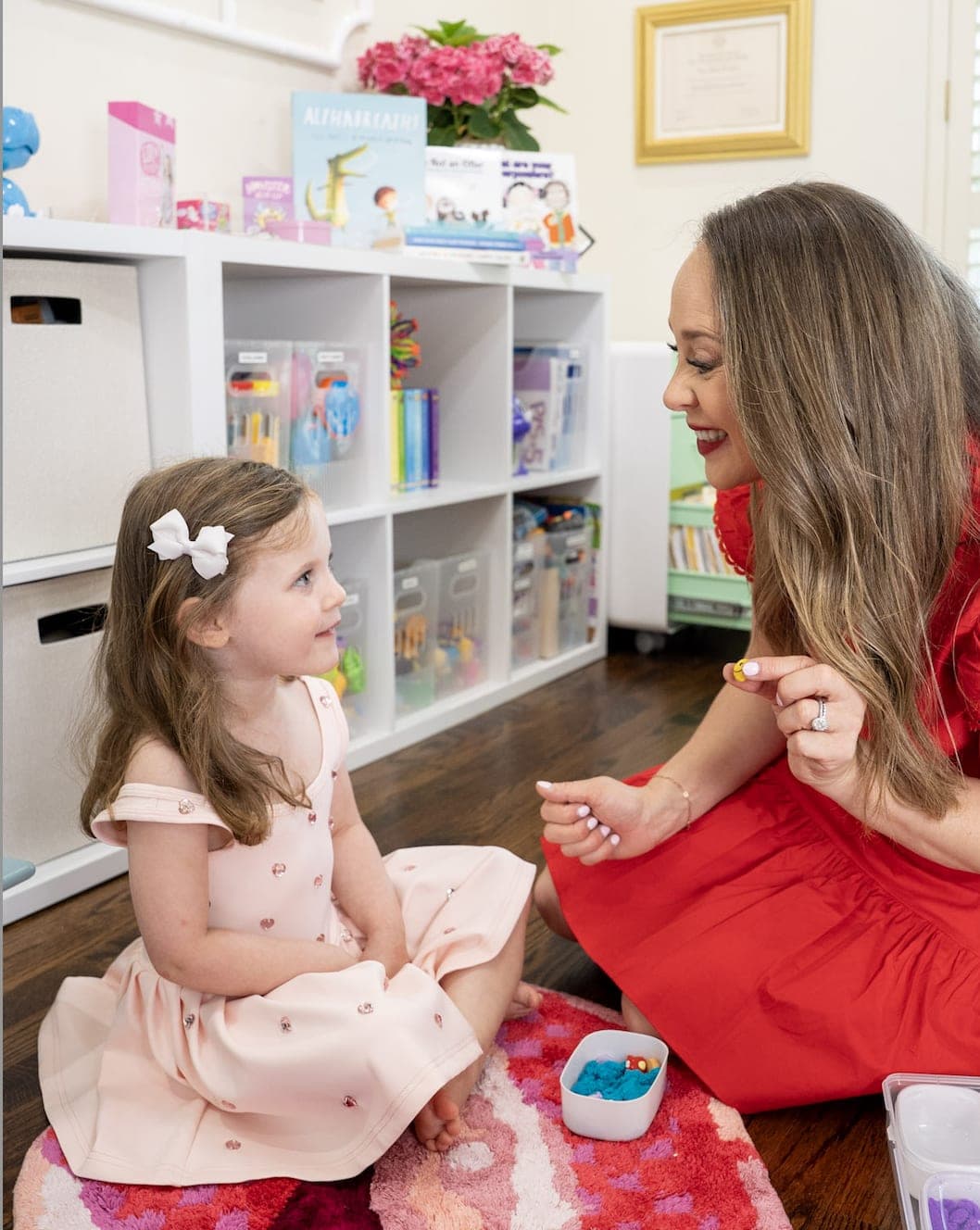
A speech therapy session using articulation cards and interactive tools
Our Speech Therapy Services
Speech Therapy for Children
Personalized therapy for articulation, language, fluency, and motor speech disorders in children of all ages.
Learn more →Speech Therapy for Adults
Targeted treatment for adults with articulation difficulties, voice disorders, fluency challenges, and cognitive-communication needs.
Learn more →Childhood Apraxia of Speech (CAS)
Specialized treatment using PROMPT and DTTC approaches for children diagnosed with or suspected of having apraxia.
Learn more →PROMPT Therapy
A motor-speech treatment approach using tactile cues to guide correct speech movements — especially effective for apraxia.
Learn more →Articulation Disorders
Treatment for speech sound errors including lisps, substitutions, omissions, and distortions affecting speech clarity.
Learn more →Language Delays
Therapy for receptive and expressive language delays, helping children understand and use language effectively.
Learn more →Frequently Asked Questions
Concerned About Speech Development?
Schedule a free consultation to discuss your child's needs with a certified speech-language pathologist.